AACE 2026: AI advances in thyroid care face barriers to adoption
Artificial intelligence is rapidly advancing the capabilities of thyroid care, but persistent challenges in validation, workflow integration, and reimbursement continue to limit adoption, according to a presentation at the 2026 AACE Annual Meeting by Johnson Thomas, MD, FACE, FEAA.
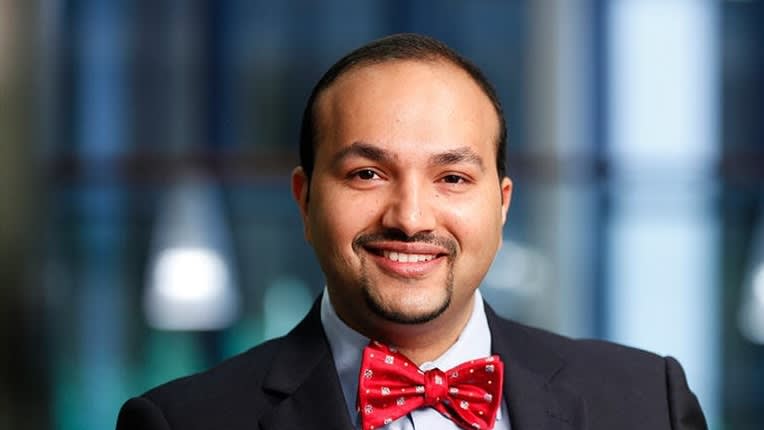
Several factors help explain the disconnect between technical capability and clinical uptake. Current AI models, often built on established risk stratification frameworks, still fall short in performance and usability. Many systems "aren’t that great," and in some cases may increase, rather than reduce, clinical workload. "Physicians are like, 'Why would I do that? I can do this [thyroid nodule classification] without it,' " said Dr. Thomas.
Economic considerations also remain a barrier. Without clear return on investment, institutional adoption can be difficult. However, evolving reimbursement policy could shift this dynamic. "Medicare might tomorrow say that they're going to approve an AI code for thyroid that might actually include some of these options, and that might make it more palatable," Dr. Thomas said.
The broader AI landscape in medicine continues to evolve rapidly. Dr. Thomas noted that on the same day as his presentation, OpenAI launched ChatGPT for Clinicians, for verified U.S. physicians, nurse practitioners, physician assistants, and pharmacists, with plans for broader expansion.
Within thyroid care specifically, several emerging technologies illustrate both the promise and current limitations of AI. AI-enabled ultrasound platforms can assist with real-time nodule characterization, allowing clinicians to capture multiple imaging planes and receive automated malignancy risk scores that can be further refined by the user.
Three-dimensional ultrasound represents another area of innovation. "You actually do one sweep on both sides, and it creates the full 3D picture," Dr. Thomas said. "As you can imagine, this saves time. People who do thyroid ultrasounds really well still take a lot of ime to do a full neck ultrasound."
Some of the most notable advances involve multimodal data integration. Dr. Thomas described research combining ultrasound imaging with molecular marker data. "Molecular markers are really great, and they already use AI in the background." In cases where molecular results were indeterminate—such as cancer risk below 50%—AI tools improved diagnostic performance. "We can actually increase the specificity and positive predictive value from the 40% range to the high 70% range," Dr. Thomas said.
Despite these advances, significant evidence gaps remain. Many AI tools demonstrate strong performance in controlled settings but lack prospective validation in real-world clinical environments. Dr. Thomas emphasized that this discrepancy raises concerns given the clinical stakes. If it was a drug, you would not prescribe these models, because it did not go through the same rigorous prospective trials.
As AI capabilities continue to expand, the challenge for endocrinology will be ensuring that innovation is matched by rigorous validation, seamless integration, and clear clinical value.
Dr. Thomas disclosed having patents, serving as a speaker and performing editorial work for several companies, and serving as an advisor for medical startups.
AACE Endocrine AI is published by Conexiant under a license arrangement with the American Association of Clinical Endocrinology, Inc. (AACE®). The ideas and opinions expressed in AACE Endocrine AI do not necessarily reflect those of Conexiant or AACE. For more information, see Policies.