AACE 2026: Will AI replace endocrinologists?
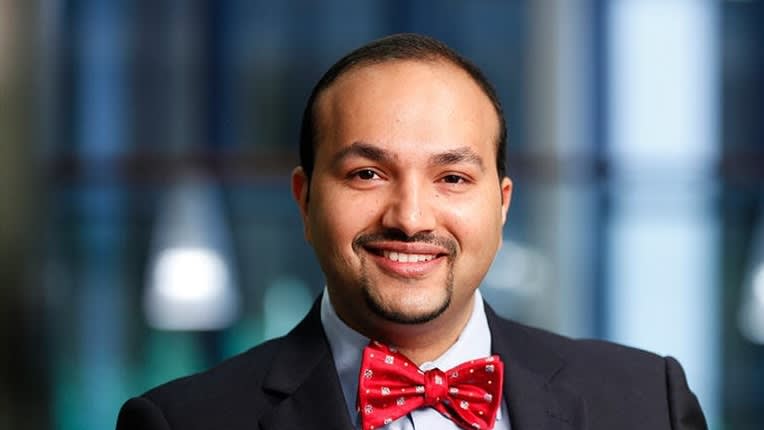
With AI's rapidly growing ability to tackle functions traditionally handled by clinicians, what role will endocrinologists play in the future of care? This was a question posed by Johnson Thomas, MD, FACE, FEAA, at the 2026 AACE Annual Meeting in Las Vegas, NV.
Our field needs a dedicated, trusted space to understand how AI is shaping endocrinology, said Dr. Thomas, Section Chair of Endocrinology at Mercy Hospital Springfield, and AACE Endocrine AI Editor-in-Chief.
An estimated 14 million clinic visits in the U.S. were canceled in a single month due to AI use, according to Gallup. Patients are increasingly turning to AI for medical advice and self-diagnosis, not because they distrust physicians, but because AI is faster, cheaper, and easier to access, he said.
The practicality of AI trumps the long wait times that have become regular occurrences in specialty care. For patients with chronic conditions such as hypothyroidism or diabetes, that wait time matters.
Dr. Thomas cautioned that the AI-enabled self-diagnosis trend creates a host of new issues. Patients often arrive with AI-generated misinformation or information lacking context that is difficult to untangle within a single clinic visit.
He shared his own experience with this challenge when a patient diagnosed with hypothyroidism requested an endocrine referral. "Our wait time was four months, so she Googled, 'What is the best treatment for hypothyroidism,' " he said. "As you can imagine, it came up with a lot of interesting things, and my 20-minute appointment was not enough to untangle all the stuff that she found."
As AI continues to improve, Dr. Thomas emphasized that clinicians must adapt to a reality where both patients and physicians are using these tools in parallel, but he also touted the potential the technology has to improve patient care.
The same technology drawing patients away from clinic may also improve the patient-physician relationship when used thoughtfully, Dr. Thomas said.
Take ambient documentation tools. By capturing visits and drafting notes, these tools allow physicians to maintain eye contact and focus on patients rather than screens. “I can look at their face, understand their emotions, and be present,” Dr. Thomas said during the presentation.
He described using AI for in-basket messaging, where systems generate detailed, patient-specific responses to common questions such as thyroid-stimulating hormone fluctuations. These replies, he said, are often clearer and more empathetic than brief physician-written messages, improving patient understanding without adding to clinician burden.
Pre-visit AI tools can gather medication adherence, symptoms, and barriers before appointments, allowing physicians to focus on decision-making rather than data collection.
"I don't think we are going to be replaced by AI agents anytime soon," he said, but cautioned there are people trying to make this future happen.
Clinicians can make AI tools safer for patients in the future by guiding the organizations building the platforms. "If they reach out to you, be the medical voice, be the voice of reason, and tell them, 'In medicine, we want to make sure things work before we jump into products.' "
AACE Endocrine AI is published by Conexiant under a license arrangement with the American Association of Clinical Endocrinology, Inc. (AACE®). The ideas and opinions expressed in AACE Endocrine AI do not necessarily reflect those of Conexiant or AACE. For more information, see Policies.