From pump to prompt: The endocrinologist as 'physicianeer' asdfasdf
Somewhere this morning, an endocrinology patient has an algorithm in their pocket making clinical decisions every five minutes. It adjusts basal insulin, predicts hypoglycemia, and corrects for what was eaten the night before. In practice, it is an artificial intelligence (AI) clinician.
Most of the endocrinologists caring for that patient were not in the room when its algorithms were designed, validated, or surveilled. They are users of a system whose own specialty—along with type 1 diabetes patients and physicians—helped to create. The gap between what endocrinology has historically built and what it now passively consumes is the defining challenge for the specialty in the next decade.
The Artificial Pancreas
Endocrinology has one of the strongest clinician-engineer co-design legacies in modern medicine. The artificial pancreas did not arrive as a gift from Silicon Valley. It emerged because clinicians spent years working alongside control theorists, mathematicians and device engineers, arguing over glucose dynamics, meal-time bolus geometry, and what a parent could realistically be asked to do at 3 a.m. when their child is hypoglycemic, frightened, and half-asleep Automated insulin delivery, retinal AI, and thyroid nodule classifiers were not technologies imposed on the specialty; they were shaped through deep clinical involvement.
That is the inheritance we now risk losing. We built the pump. Whether we will now help build the prompt or quietly hand the keys to someone else somewhere between the closed-loop pump and the closed-source large language model, is an open question.
Why Endocrinology Is The Front Line
Endocrinology is unusually exposed to the AI transition, for reasons that don’t sit neatly under one heading.
The most obvious is data density. We manage continuous streams rather than snapshots: glucose values every five minutes, weights every morning, thyroid trajectories over decades. This is exactly the longitudinal signal AI thrives on, which means the technology will land here first and hardest. Compounding this, a meaningful fraction of endocrine care is titration-driven and algorithmically tractable, which makes it primary territory for autonomous tools, and for the kind of small design flaw that propagates across a population. Diabetes and obesity are population diseases. A subtle bias propagated across millions of patients becomes a public health problem in a way that a niche specialty bias does not.
The point that gets the least attention is the asymmetry of failure. An engineer optimizes accuracy, while an endocrinologist optimizes safety. Those are not the same objectives. Hypoglycemia, alert fatigue, a missed thyroid malignancy, and an under-treated patient during transition of care are specialty-specific failure modes, and they are largely invisible to anyone who has not sat in the clinic. A generic software error in an insulin-titration model is a clinical catastrophe.
The 'Physicianeer'
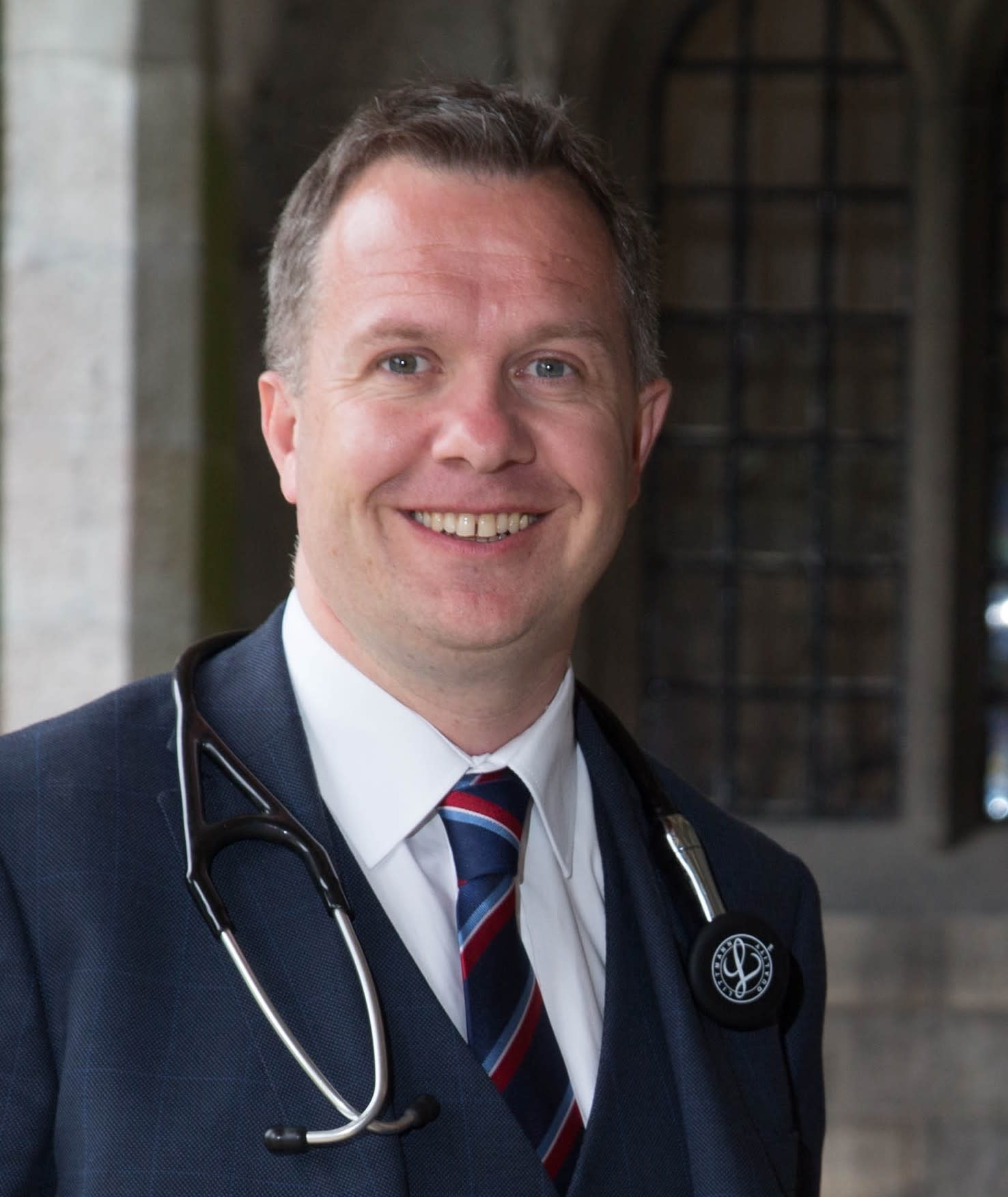
No realistic projection has the endocrine workforce keeping pace with the global demand created by diabetes and obesity. AI is, therefore, a necessary (not optional) infrastructure. To lead rather than be led by AI, the specialty needs a recognizable archetype: a clinician fluent enough in engineering and digital systems to participate in design rather than only consume outputs. The physicianeer is not expected to write every line of code, but to know enough about data, devices, workflow, validation, and failure modes to ask the questions that determine whether the technology is clinically safe. This archetype is the “physicianeer” (physician/engineer). The role has already evolved and exists in pockets across the specialty. It simply needs to be named, trained for, and institutionalized.
This is where co-design becomes the operating principle. Co-design means being in the conversation when the question is written, not when the prototype is demoed. A surprising number of clinical AI tools fail because they correctly answer the wrong question, framed by someone who has never run a busy clinic. It also means contributing to the edge cases. The atypical Cushing’s, the mislabelled type 1, the false-positive thyroid nodule--this is training data that nobody outside the specialty has. And it means validating the workflow. A model can be 98% accurate and still be useless. If the alert fires 12 times in a clinic or interrupts the moment a patient is finally telling you why they stopped their metformin, it will be ignored, worked around, or quietly switched off.
Finally, and this is the part most often skipped, clinical AI systems need active stewardship after deployment. They drift. They degrade. They encounter populations they were never trained on. Treating deployment as the end of the project rather than the beginning is one of the more consequential mistakes being made in clinical AI.
The Inverse Digital Care Law
There is a systemic risk worth naming alongside all of this. The preventive care pioneer, Dr. Julian Tudor Hart, observed in his Inverse Care Law that the availability of health care tends to vary inversely with the need for it. A digital version of the same pattern is now emerging. Technologies designed without underserved populations in mind end up optimized for the highly resourced: the patient without reliable broadband, the clinic without device-upload infrastructure, the person whose language or health literacy is absent from the training data. In endocrinology, where metabolic disease disproportionately affects those facing structural inequities, AI could narrow that gap or widen it. There is no neutral trajectory. If endocrinologists are not in the design room, the existing digital divide will be encoded into the next generation of tools.
The Path Forward
The insulin pump on a patient's belt today is a monument to what our specialty achieves when it actively shapes technology. The AI systems emerging now represent an even more profound moment. Either endocrinologists will be actively involved in the design of these systems, or we will spend the next decade explaining to our patients why a tool built for them does not quite fit.
We built the pump because endocrinologists, engineers, and patients understood that physiology alone was not enough; safety, workflow, trust, and lived experience mattered too. AI will require the same partnership. The pump was endocrinology's first great lesson in co-designed intelligence. The prompt should be its next.
Derek O’Keeffe, MD, PhD, MBA (@Physicianeer on X), is a Consultant Endocrinologist at University Hospital Galway and Professor of Medical Device Technology at the University of Galway, Ireland, where he directs the Health Innovation via Engineering (HIVE) Lab. He holds dual doctorates in medicine and engineering, an MBA, and is a graduate of the Mayo Clinic Endocrinology fellowship. He was recognized in 2025 with the Mayo Clinic Early Career Alumni Award and was awarded the AACE Outstanding International Clinician Award in 2026.
AACE Endocrine AI is published by Conexiant under a license arrangement with the American Association of Clinical Endocrinology, Inc. (AACE®). The ideas and opinions expressed in AACE Endocrine AI do not necessarily reflect those of Conexiant or AACE. For more information, see Policies.